


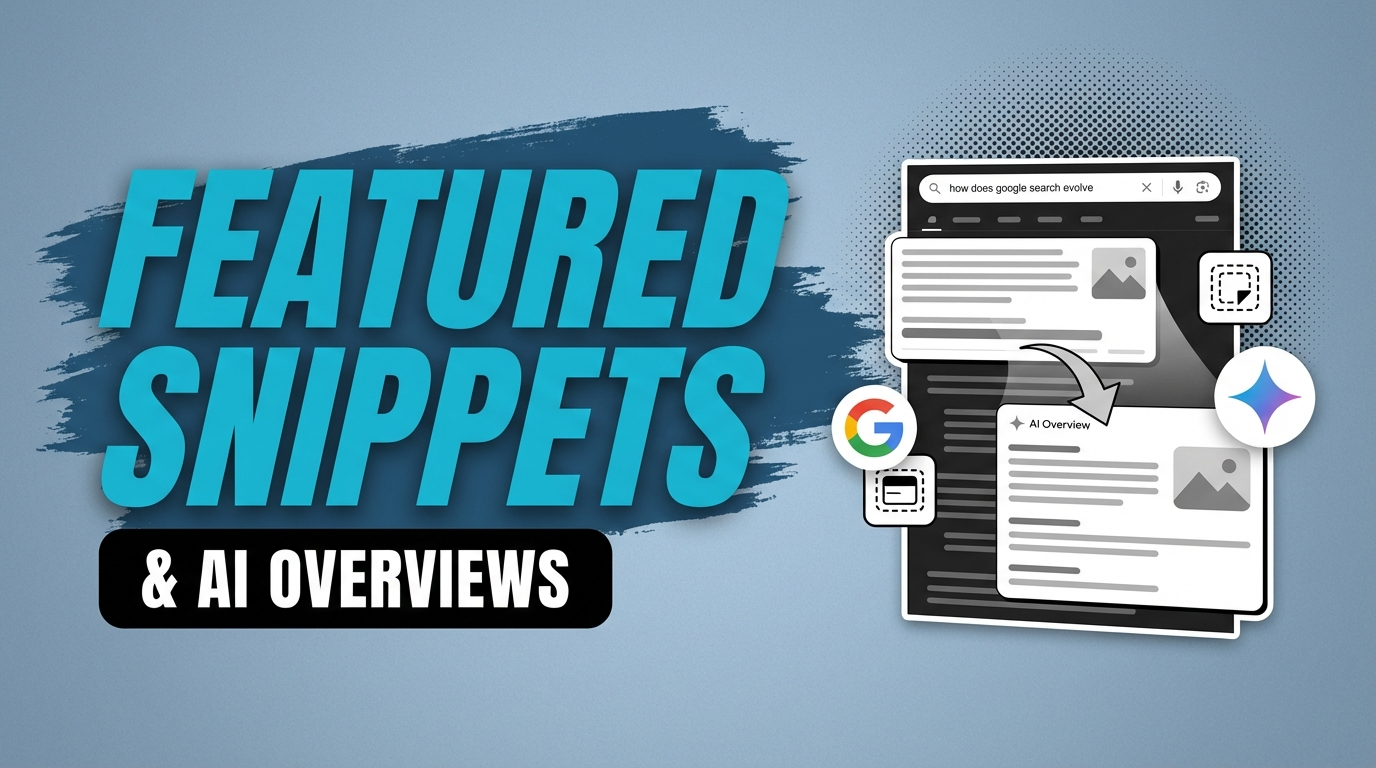
In 2020, we wrote about featured snippets and how churches could win “position zero” in Google. That advice was solid at the time. But the search landscape has shifted significantly since then.
Featured snippets still exist. But Google’s AI Overviews have taken over much of that real estate. If your church is trying to show up in search, you need to understand what changed and what it means for your website.
Here’s the updated picture.
What Featured Snippets Were (and Why They Mattered)
Featured snippets were Google’s way of surfacing the best answer to a question at the very top of the results page. Before the organic results. Before the ads. Right there in a box.
Churches that optimized for them saw real benefits: more visibility, more clicks, and a perception of authority. If Google chose your content as the best answer to “how to find a church near me,” that was a significant trust signal.
The format came in a few varieties: paragraph answers, numbered lists, bullet lists, and tables. Each rewarded content that was structured clearly and answered a specific question directly.
For several years, chasing position zero made a lot of sense.
The Shift: From Featured Snippets to AI Overviews
In May 2023, Google began rolling out AI Overviews (initially called Search Generative Experience). By 2025, they appeared on roughly 25% of all US searches. For informational queries, that number climbs to nearly 40%.
AI Overviews do what featured snippets did, but more aggressively. Instead of pulling a single answer from one source, Google’s AI synthesizes information from multiple sources and writes its own response. It may cite your church’s content. It may not. Either way, it answers the question without requiring a click.
This is a fundamentally different dynamic than what existed in 2020. And it has real consequences for how churches think about SEO and search visibility.
What Is Zero-Click Search?
Zero-click search is when someone types a query into Google and gets their answer directly on the results page. No click. No visit to your website.
The numbers here are significant. According to Semrush’s 2025 study, 58.5% of US searches end without a click to any website. When a query triggers an AI Overview specifically, that zero-click rate jumps to 83%.
Eight out of ten people who see an AI Overview never leave Google.
This matters for churches. When someone searches “what time do churches start” or “is the Bible historically accurate” or “how to get baptized,” they may get a synthesized answer right there on the results page. No church website required.
The question is: what do you do about it?
How This Affects Church Websites Specifically
The impact is not uniform. Zero-click search hits some queries much harder than others.
Broad informational queries suffer the most. “What is Pentecost?” or “how to pray?” are the kinds of questions Google’s AI handles confidently now. The answer lives in the SERP, not on your website.
Local queries still drive clicks. “Churches near me” or “Baptist church in [city]” still require Google to show specific local results. The local pack and map results are alive and well. Local SEO remains one of the highest-value investments a church can make.
Specific or nuanced queries still reward real content. “How does our church approach discipleship?” or “what makes a church healthy long term?” are the kinds of questions AI can’t fully answer from generic sources. Your unique perspective and ministry philosophy are things Google has to go to you for.
Understanding this distinction helps you prioritize. Not all content is equally threatened by zero-click search. And some content is more important than ever.
Featured Snippets Still Exist: When and Where They Appear
Despite the AI Overview expansion, traditional featured snippets haven’t gone away. They still appear regularly, particularly for:
- Queries that are not well-served by generative AI
- Specific procedural questions (“how to set up online giving”)
- Comparison-style queries (“difference between baptism and dedication”)
- Queries where Google’s AI coverage is thin
Research from Ahrefs and Semrush consistently shows that pages already ranking as featured snippets are the most likely to be cited inside AI Overviews. The same content quality signals that earned you position zero in 2020 still earn you citation in 2026. The format changed. The fundamentals did not.
If you want to understand more about how Google’s AI Overviews work specifically, we have a dedicated post on that.
How to Optimize for Both Featured Snippets and AI Overviews
The good news: the optimization strategy for featured snippets and AI Overviews overlaps significantly. Here is what actually works.
Answer questions directly. Lead with the answer, then provide the context. If someone asks “what is a church elder?” your first sentence should answer it. Google’s AI pulls direct answers. So do snippet algorithms. Don’t bury your answer three paragraphs down.
Use structured formatting. Headers, numbered lists, and bullet points are not just good for readers. They are signals to Google about how your content is organized. AI Overviews pull from well-structured pages far more often than dense blocks of unbroken text.
Target specific, concrete questions. “Church digital marketing” is vague. “How do small churches get found on Google?” is specific. The more precisely your content matches a real question someone is typing, the more likely it is to be cited in any format: snippet, AI Overview, or People Also Ask.
Establish topical depth. Google’s AI favors sources it considers authoritative on a topic. One post on church SEO is fine. A cluster of posts that comprehensively covers church search visibility is far better. This is one reason we’ve built out content on AI search for churches and what content AI tends to cite.
Keep content current. Stale content is a liability. AI systems actively prefer recent, accurate information. Any post with outdated statistics or references from 2019 is competing at a disadvantage.
The Silver Lining: AI Traffic Converts Better
Here is something that often gets missed in the doom-and-gloom conversation about zero-click search.
The visitors who do click through from AI-influenced results tend to be more qualified. They have already been primed by the AI’s summary. They know roughly what they’re going to find. They clicked because they wanted more.
This means your traffic numbers may drop, but your engagement and conversion rates may actually improve. A family searching for a church that sees your church mentioned in an AI Overview, then clicks through to your site, is a warmer prospect than a cold visitor who stumbled onto a blog post.
The goal shifts from raw traffic to being present in the right moments. Quality of visibility over quantity of clicks.
What to Do About It: Practical Action Steps
This is not a crisis. It is a recalibration. Here is where to focus your energy.
Audit your content for question-based structure. Go through your existing blog posts and check whether each one directly answers a specific question in the first paragraph. If not, update the opening to lead with the answer.
Prioritize local SEO. Zero-click search mostly affects informational queries. Local queries still convert through traditional clicks. Make sure your Google Business Profile is complete, your location pages are strong, and your church shows up in local pack results.
Write for citation, not just clicks. The new goal for informational content is to be cited inside AI Overviews. That means writing accurate, well-structured, authoritative content that Google’s AI would trust to summarize. Thin content does not get cited. Neither does content that hedges every claim.
Build topic clusters. A single post will not establish authority. A set of five to ten posts that together cover church digital marketing comprehensively will. Google’s AI rewards sources that go deep on a topic.
Monitor your SERP appearances. Use Google Search Console to track impressions, not just clicks. If your impressions are stable but clicks are declining, that is a sign you are appearing in AI Overviews but not getting the click. That is not necessarily bad. It means you are visible. Focus on whether that visibility is leading to brand recognition and direct searches over time.
Do not abandon SEO. Some churches will hear the zero-click statistics and conclude that SEO is no longer worth the investment. That is the wrong conclusion. The churches that remain consistent in producing quality, structured, question-answering content are the ones who will be cited in AI Overviews and found in local search. The churches that stop will become invisible. Consistency still wins.
Search has always rewarded the same underlying thing: useful, accurate, well-organized content that answers real questions. AI Overviews did not change that. They just raised the stakes.
Churches that understand this shift, and adapt to it, will be more visible in 2026 than they were in 2020. Not despite the change. Because of it.
How Visible Is Your Church in Search?
Our free audit checks your local SEO and AI search signals in 60 seconds.
Run Your Free Audit →