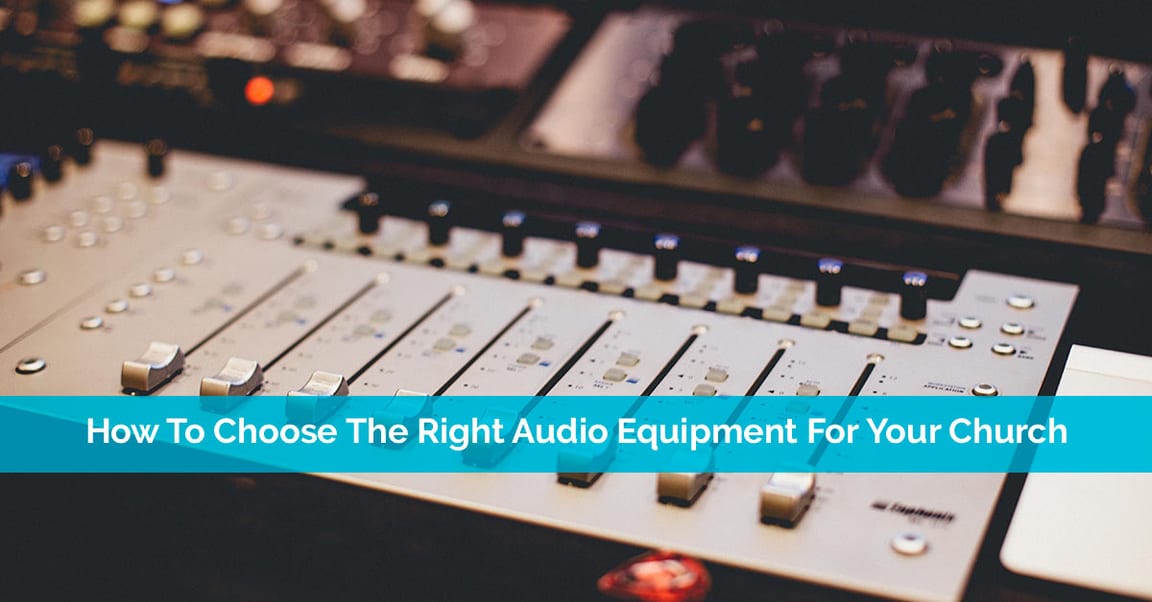
The right audio equipment helps make your sermons, music and overall experience far more effective and engaging. Think about it as the difference between someone shouting in a large room and surround-sound audio in a movie theater? Which would you rather experience at church? Getting the right sound ensures nothing is distorted while making sure everyone hears clearly. It’s one of the simplest ways to create a more engaging experience for your members.
Know Your Church Size
The physical size of your church has a large impact on the type of audio equipment you’ll need. A small room obviously won’t need as many speakers and amplifiers as a large 1,000 person room. Buying more gear than you need is just a waste of funds as by the time you actually can use it, it may be too outdated to be effective. You should also consider any acoustics that may be built-in. This naturally amplifies sound throughout your church and cuts down on the amount of speakers and microphones you’ll need.
Adjust For Number Of People
The number and placement of speakers depends on the number of people in your church. While you don’t need an exact number, use an average to gauge. Small, tight spaces may be able to get by with only a few speakers, one in front and one in back. However, larger rooms with more spacing may need speakers placed every X number of pews to allow for even sound distribution throughout the room. Remember, the layout of your speakers is even more important than the number. Of course, the more speakers and audio equipment in general that you have, the more difficult it is to manage from your soundboard.
Wired Or Wireless?
In an age of Bluetooth and wireless everything, is the right audio equipment wired or wireless? On the surface, wireless systems might seem the easiest. After all, you just pair everything and you’re done. No pesky wires to deal with. However, wireless audio equipment does have its challenges, such as frequency changes and frequency compatibility as you change equipment. Wireless equipment also tends to cost slightly more. However, wired systems are more difficult to install and require you to buy additional cables and ensure all those cables are hidden and out of the way. Smaller churches may benefit from wired systems, especially used systems that fit better within their budgets. Growing and larger churches should consider wireless just for the simplicity of installation. Buying a complete system at once helps avoid compatibility issues.
Buy Scalable Audio Equipment
Members, both young and old, love good sound quality. This is why many are willing to invest in both audio equipment and acoustic changes, such as adding in acoustic panels or building a new church with acoustics built in. However, it’s important for churches to respect those investments by buying scalable audio equipment. For instance, if you have plans to grow your church, you don’t want to buy a soundboard that won’t be able to support anything more than you have now. By spending a little more now, you’ll have equipment that grows with you. You might consider a wireless system that can easily support a dozen more speakers and microphones. The last thing you want is to have to completely buy new systems every few years as your church grows.
Cheaper Isn’t Always Better
It’s an old saying, but sometimes you do get what you pay for. That ultra low-cost audio equipment is probably cheap for a reason. It might sound great in a kid’s bedroom for slumber parties, but not so well for your Christmas pageant. While you don’t have to buy top of the line equipment, consider the following to make sure you get the right audio equipment the first time:
- Consider lightly used audio equipment to save money (make sure you hear a demonstration or have a chance to test it yourself before buying)
- Purchase entire systems at once as many retailers offer discounts on complete systems versus individual components
- Buy for the size of your church (you don’t need the same system a mega church uses if your church can only hold 200 people)
- Only buy what you can actually manage (complex equipment that requires a large audio team to manage won’t work unless you actually have a team to manage it)
Think Multi-Purpose
If possible, try to buy multi-purpose equipment. For instance, if you buy microphones, make sure they’re designed for singing, talking and recording (great for podcasts). When buying speakers, look for speakers that are fully adjustable to optimal sound for music and speaking. This is where a high-quality sound board comes in.