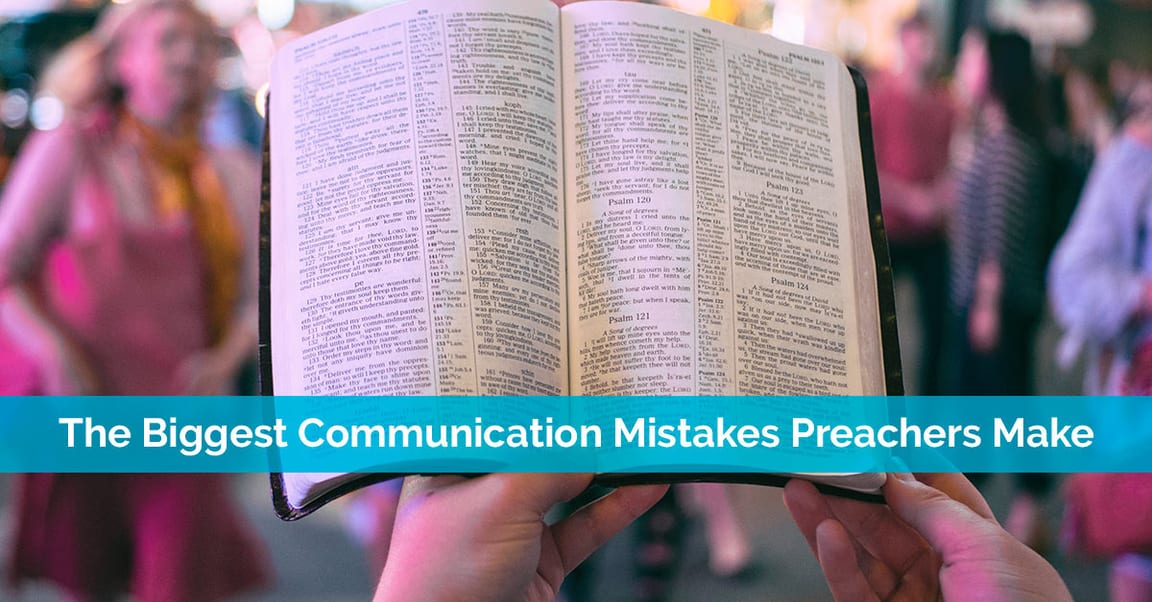
A preacher’s job isn’t easy, especially when it comes to finding the right ways to communicate God’s word to your church family. Despite your best intentions, common communication mistakes may make it difficult for members to understand you. Even worse, these mistakes may cause members to miss important announcements. Keep your members engaged, encourage new membership and spread the word more effectively by learning which mistakes you’re making and how to prevent them in the future.
Using The Preacher Voice
Have you ever watched yourself during a sermon? When you step up to the pulpit, does a change come over you? One of the most common communication mistakes is turning on the over dramatic preacher voice during sermons. While you do have to be slightly more engaging than you would be if you were having a one-on-one conversation, sounding like an overly excited announcer and a monster truck rally may turn listeners off. To them, it almost sounds fake. The idea is to sound genuine. Show your personality, but don’t try to put on a show just for the sake of engaging your members. Be yourself and let your passion shine through. Using the right speakers and mics are much better than shouting and your members will listen much better.
Avoiding Eye Contact
People come to church to connect with God and their fellow believers. However, if the preacher doesn’t make eye contact with the members during the sermon, it creates a massive disconnect. The connection people are craving never really happens. While you don’t have to make eye contact with everyone, look out at your church family instead of the back wall. To ensure your members are making eye contact too, consider having worship backgrounds behind you with your main points listed.
Seeming Lethargic
You don’t have to run widely around the stage or up and down the aisles. But, one of the top communication mistakes is seeming to be lethargic while preaching. If you stand calmly behind the pulpit the entire time looking down at your notes, you won’t engage any one. Instead, walk around a little, use hand gestures to emphasize points and maybe even use images and music as your cues on what to say next versus a handful of notes.
Speaking Only In The Church
This one might seem confusing. After all, it’s your job to speak in church. However, if you want to reach more people, you have to speak outside of the church walls too. This doesn’t mean you have to travel all the time. Instead, post regularly on your church’s blog to keep people engaged even outside of church. Don’t forget about social media too. Social platforms are a great way to help build your church’s presence online. Take the time to reach out online. Your members, potential new members and those just looking for spiritual inspiration will be glad you did.
Rarely Or Never Asking For Feedback
What do your members really think about your preaching and communication style? Have you ever asked them? As long as people seem to be listening, it’s easy to think you’re doing your best. One of the worst communication mistakes you can make is never asking for feedback. Yes, it’s not always easy to hear, but the idea is to improve and be the preacher your members need. While some feedback will just be petty things, other comments will help you improve. Offer an anonymous form online on your church website or your church’s app (if you have one) to allow members to offer feedback without any fear of being judged. If you post live sermons online, anyone watching can also submit feedback to help you better connect with your online audience.
Forgetting About New Members/Visitors
It’s common to talk to your church family as if they’ve always been there. You might use acronyms, inside jokes and other communications only long term members would understand. But, don’t forget about new visitors and members. They won’t know what you’re talking about. This makes them feel excluded and no one wants that.
Being The Center Of Communication
Finally, the preacher shouldn’t be the center of all communications. Your church should be communicating in a variety of ways and members should pay attention to all those different channels. For instance, if an important event is coming up, members shouldn’t rely on the preacher alone to remind them. Use newsletters, a church website, text messaging, social media and paper flyers to keep your members informed. Are you making these communication mistakes? Use your church website to improve communications and become an even better preacher.